Blog
Digital Product Passport Software: 10 Options Compared

On 18 February 2027, the EU Battery Regulation starts requiring a battery passport for EV batteries, LMT batteries and industrial batteries over 2 kWh. Other product groups follow later, through delegated acts under the ESPR framework rather than one shared deadline.
A fixed date turns the choice of digital product passport software into a procurement decision, not a research project. Assess each of the ten tools below against four operational needs: how it structures product records, how it collects supplier-owned data, how it separates access for public users, legitimate-interest parties and authorities, and how it publishes controlled versions. Those four points are where the tools differ, and the selection checklist after the reviews lets you test your shortlist against real products and suppliers.
Table of Contents
- 1. DPPWare
- 2. Tappr
- 3. DPP Envoy
- 4. PassportCraft
- 5. TrusTrace
- 6. PicoNext
- 7. Substantio
- 8. Circulor
- 9. Spherity VERA
- 10. Bosch Battery Passport
- Digital product passport software compared
- How to Choose Your DPP Software Without Buying Unnecessary Scope
- Frequently Asked Questions
1. DPPWare
Best for manufacturers and brands that want structured supplier-data collection and controlled passport publishing, particularly in textiles. DPPWare is built and hosted in Germany, with data stored in a data centre in Nuremberg.
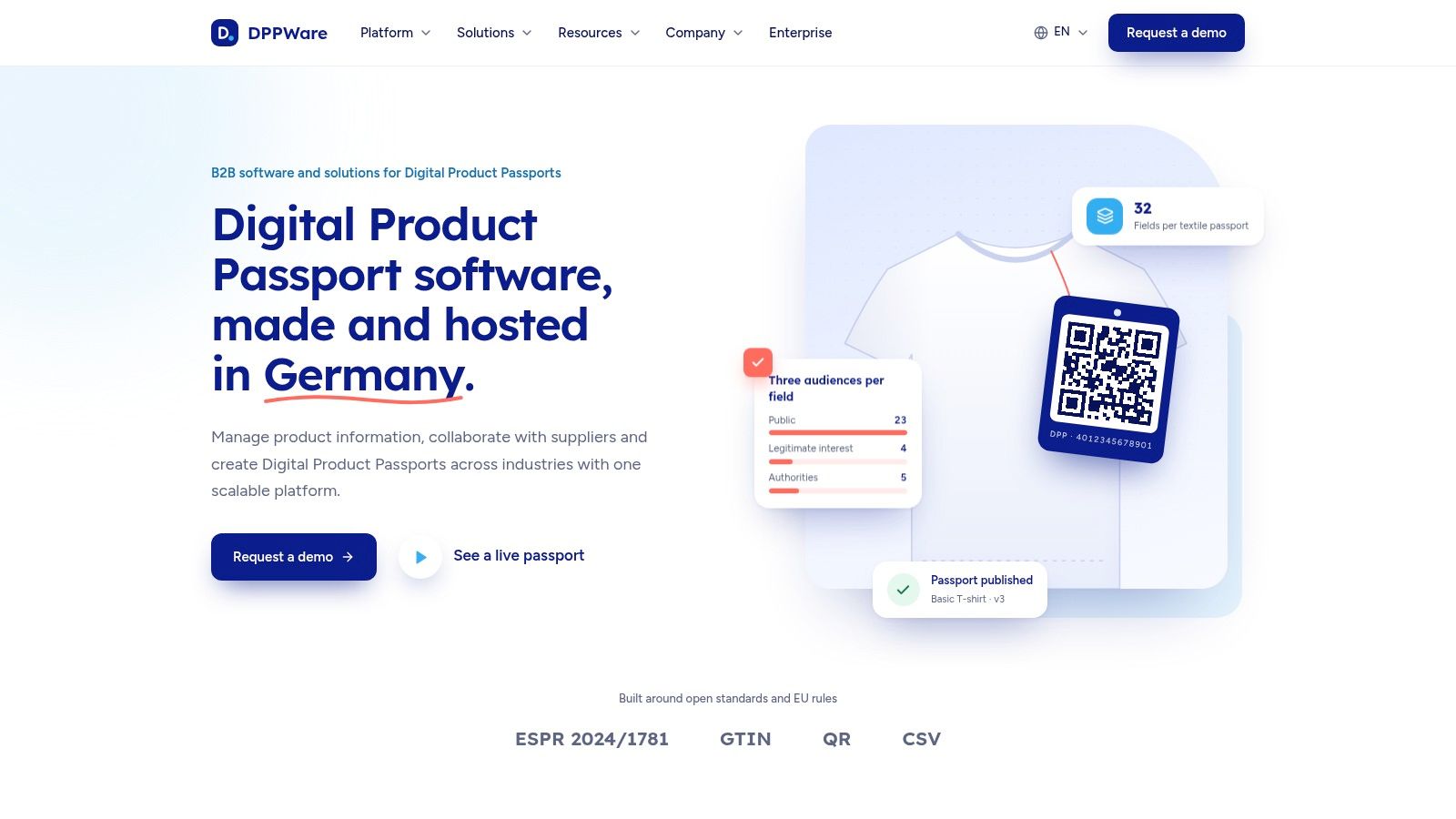
Our workflow starts with a record per model, batch or item, covering identifiers, materials, suppliers and completeness by section. Suppliers receive a link requesting the fields they own, and their answers go through review and approval before entering the approved record.
Where the workflow fits
- Product data structure: Textile workflows work out of the box. Batteries, electronics, furniture, construction products, metals, automotive components and packaging require customer-specific field sets.
- Supplier collection: Targeted request links keep suppliers focused on their contribution rather than asking them to complete an entire passport.
- Tiered access: Fields can be assigned to public, legitimate-interest or authority audiences. Verified access for restricted audiences is planned, so distinguish audience configuration from operational identity verification.
- Versioned publishing: Required-field checks precede publication. Published passports have QR-linked public pages and version histories, supported by readiness reports, an activity log and CSV export.
The main advantage is keeping collection, approval, completeness and publication together. A compliance manager can distinguish a missing supplier response from information received but not yet approved.
The trade-off is product maturity and integration scope. API access, integrations, single sign-on, CSV import, document uploads, supplier-request emails and custom branding are planned, not available today.
Pricing requires a commercial discussion. Choose this approach when a managed product-data workflow matters more than immediate connections to existing enterprise systems, and remember that software doesn't guarantee compliance or replace certification, testing or legal advice.
2. Tappr
Choose Tappr when supplier information and customer-facing product services belong in the same programme. Its Brand Cloud organises product information, Trace collects supplier contributions, and Passport Builder publishes customer-facing pages.
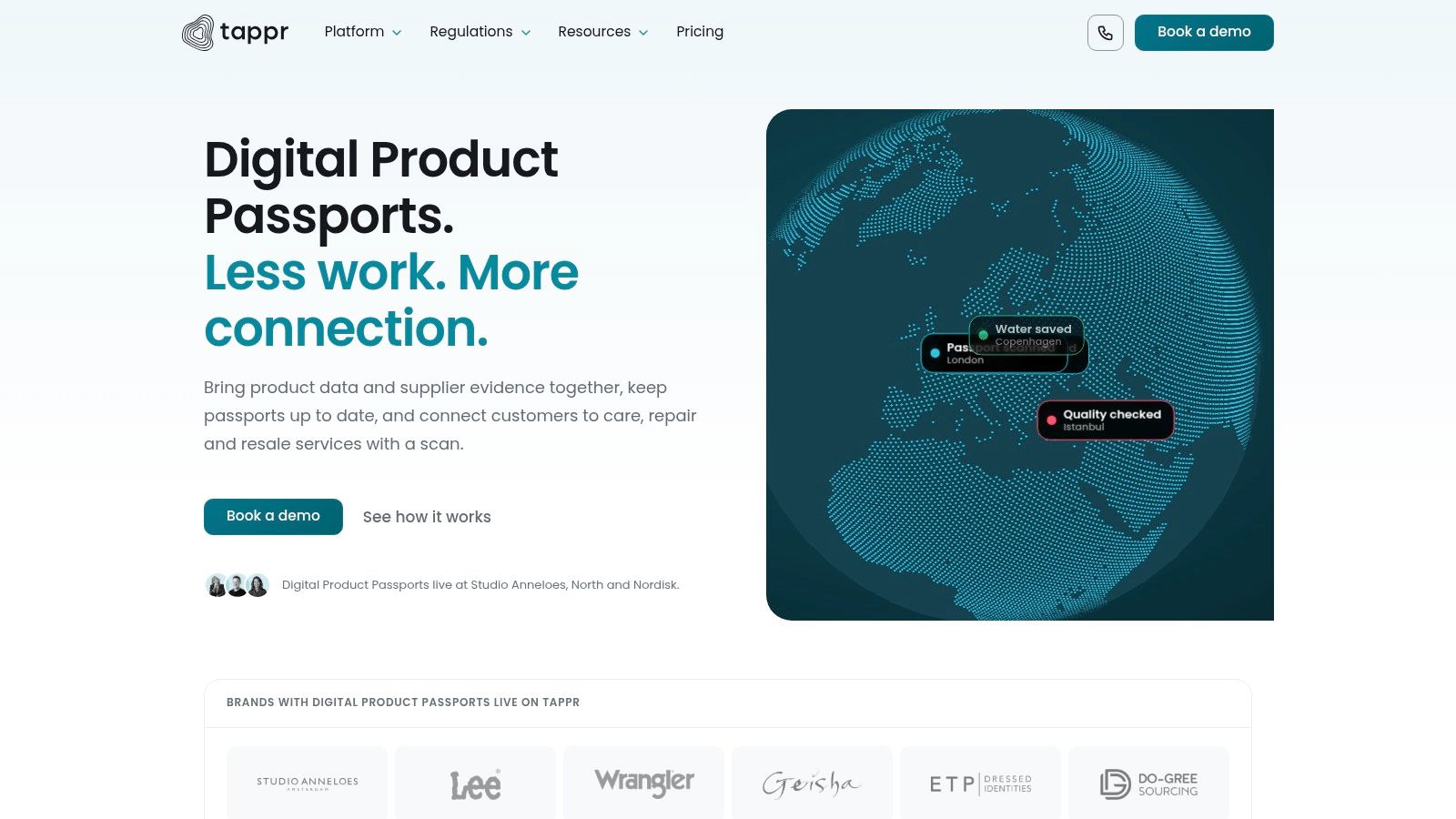
That combination suits brands that want care guidance, warranty information and repair services alongside passport content. Supplier responses without accounts can also reduce onboarding friction.
Against the core criteria:
- Structure: Product records cover specifications, materials and images.
- Collection: Supplier links support information and evidence gathering.
- Access: Demonstrate field-level restrictions for each required audience before selecting a plan.
- Publishing: QR-linked pages remain updateable after printing, but request a demonstration of approval gates and retained release history.
The advantage is breadth: product teams can organise upstream information while customer-service teams use the published content. The limitation is that broader customer engagement functionality may add scope without solving your immediate compliance bottleneck.
Pricing is quote-based and depends on the proposed plan, item volume and modules. Ask the vendor to separate supplier collection, passport management and customer-service functionality in its proposal.
For a useful acceptance test, submit a revised material declaration through a supplier link. Confirm who reviews it, which audiences can see it and whether the previous published version remains identifiable.
3. DPP Envoy
DPP Envoy is a strong shortlist candidate when documents and structured product records need to travel through the same review process. Its workflow covers product setup, supplier contributions, review and hosted publication.
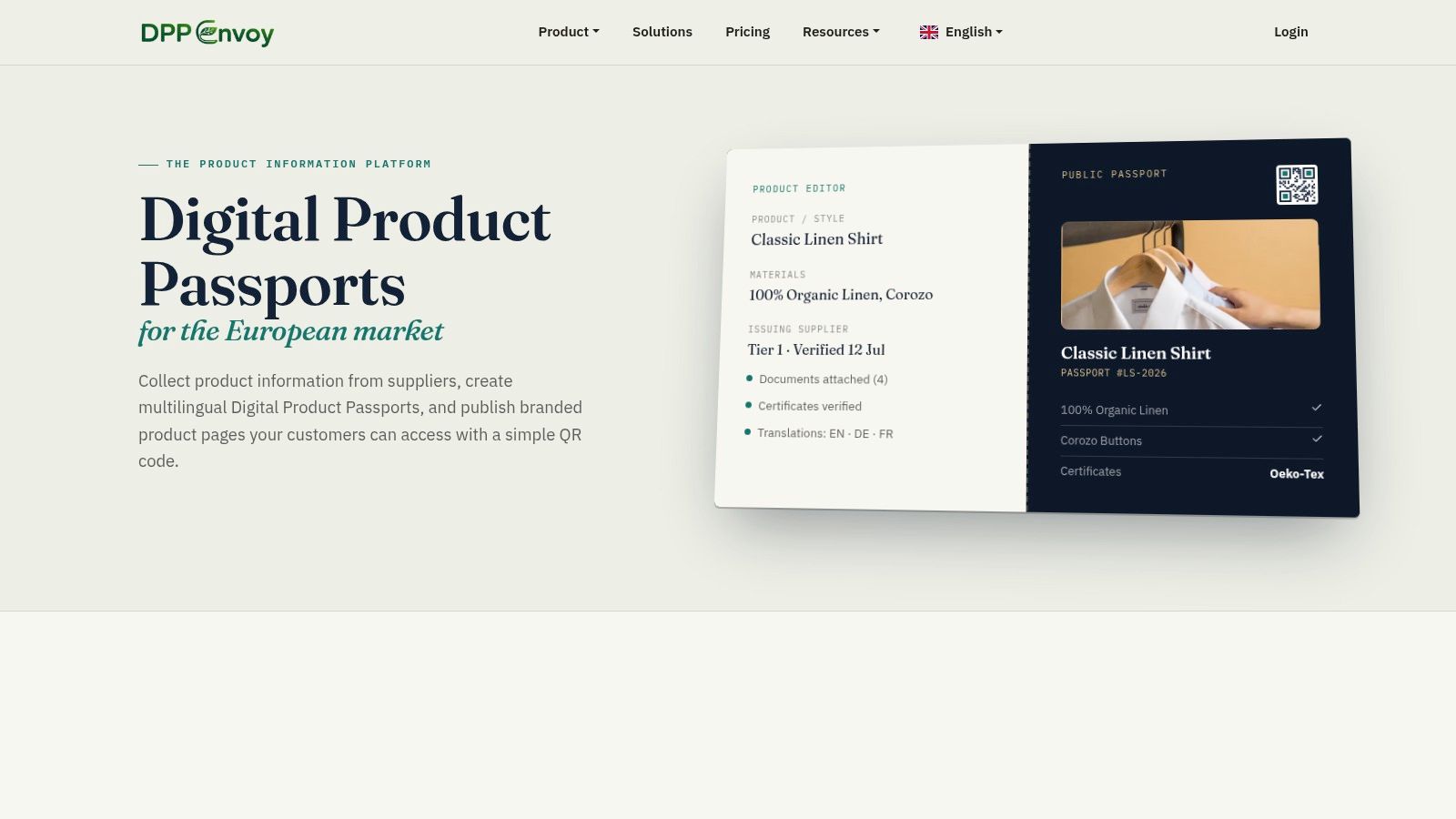
Reusable templates support repeatable records, while a document library accommodates manuals, certificates, declarations and warranties. Multilingual passports, permanent QR codes and version history address the publishing side.
Test the approval boundary
Product structure and supplier collection are explicit parts of the offering. Secure sharing links and a supplier portal make it relevant to teams collecting information from external contributors.
Tiered access needs closer inspection. A secure supplier portal isn't the same as differentiated read access for customers, repairers and authorities. Ask for a demonstration using restricted fields, not just restricted workspace membership.
Versioned publishing is a clear strength, provided the demonstrated workflow preserves the relationship between approved values, supporting documents and published releases.
A certificate stored beside a product isn't proof that every value copied from it has been reviewed.
Published plans make initial comparisons easier, but confirm how variants, batches and item-level records count towards product limits. The explanation of what a DPP contains is a useful starting point for separating the structured record from its public presentation.
4. PassportCraft
Start with PassportCraft if your immediate challenge is turning spreadsheet-based information into organised passport records. Its guided entry process and missing-information checks give product-data teams a practical starting point.
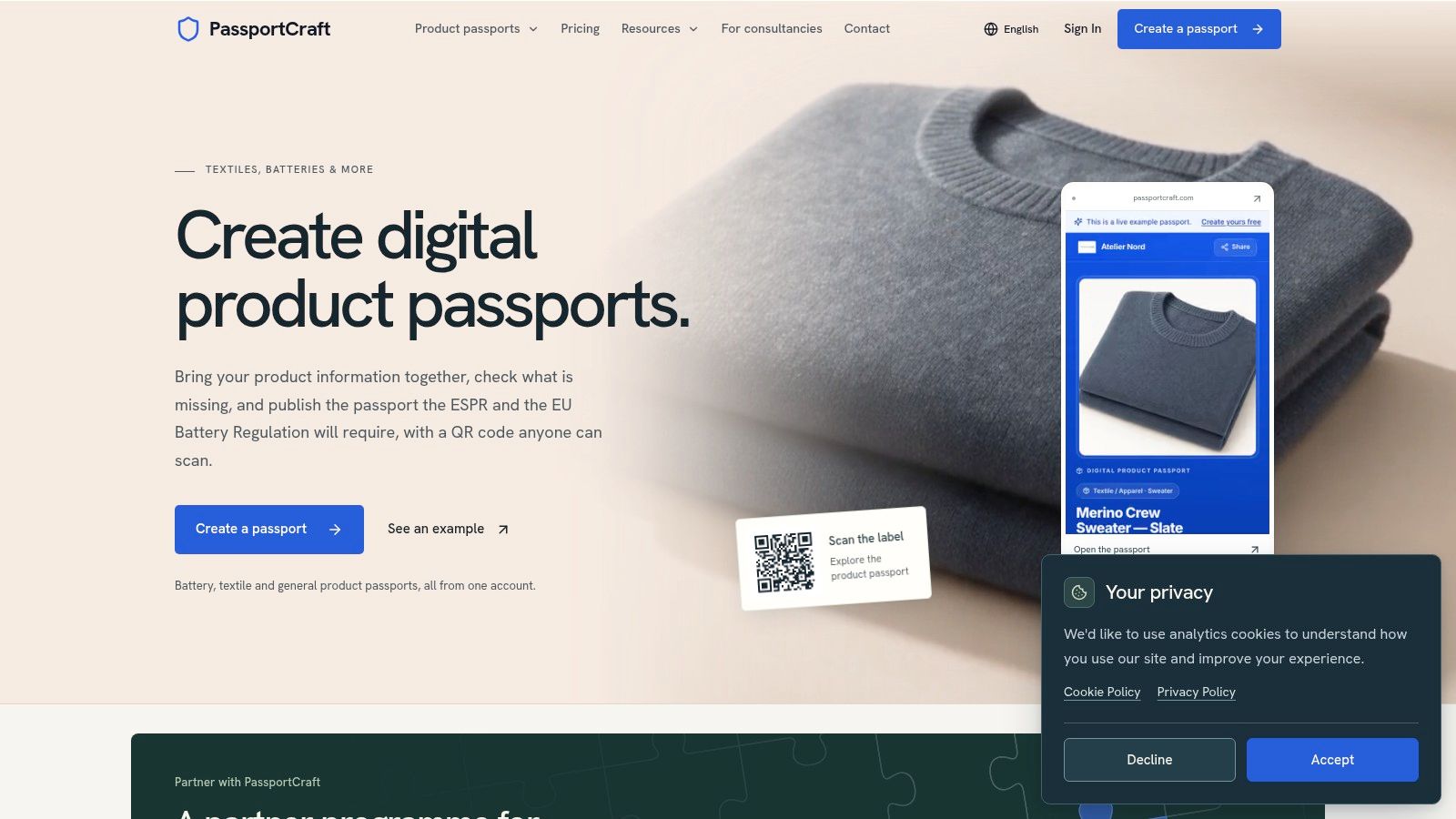
The platform advertises CSV import, REST API access and connections to supported AI assistants for drafting. It also states that passport data is stored in Ireland.
- Product structure: Guided entry and completeness checks help organise initial records. Test whether your model, batch and item relationships fit the available data model.
- Supplier collection: Importing a spreadsheet doesn't establish supplier ownership or approval. Demonstrate how external contributions enter the review process.
- Tiered access: Confirm audience permissions and plan limits using actual restricted fields.
- Versioned publishing: Public pages and QR generation are available. Verify release history, approval controls and behaviour after an update.
Its advantage is accessibility for teams starting from existing files. Its limitation is that drafting and publishing functionality shouldn't be mistaken for a complete supplier-governance process.
The vendor states that it doesn't register passports with an EU registry or certify products. Treat that boundary as a procurement requirement, not a minor disclaimer.
Review AI-assisted drafts against approved source information. Fluent wording can't resolve an unknown material composition or establish whether a supplier declaration applies to the product being published.
5. TrusTrace
For apparel and textile organisations with complex upstream networks, prioritise traceability before page design. TrusTrace places its DPP offering within a wider supply-chain traceability and compliance platform.
Its offering combines a product-data repository, upstream information collection, product identities and persistent QR links. A published textile DPP data protocol gives teams a concrete structure to examine during evaluation.
Stronger fit for upstream complexity
Product structure and supplier collection are the main reasons to shortlist it. Ask the vendor to trace a material value from an upstream contributor through processing stages into the finished product record.
Tiered access and versioned publishing still need explicit demonstrations. Supply-chain traceability doesn't, by itself, prove that a repairer receives the correct restricted information or that an approved passport release can be reconstructed later.
The advantage is attention to underlying information rather than only consumer-facing presentation. API-based exchange and connections with existing systems also make it relevant to established product-data environments.
The trade-off is implementation scope. A broader traceability programme requires supplier onboarding, data mapping and internal ownership, not just a publishing configuration.
Pricing requires a scoped proposal. Explore vendor-described pilots and industry-project participation in reference discussions, but judge your purchase on functionality demonstrated for your own supplier network.
6. PicoNext
PicoNext deserves attention from ecommerce-led brands already using Shopify. Its Shopify workflow can use store product information as a starting point for passport creation.
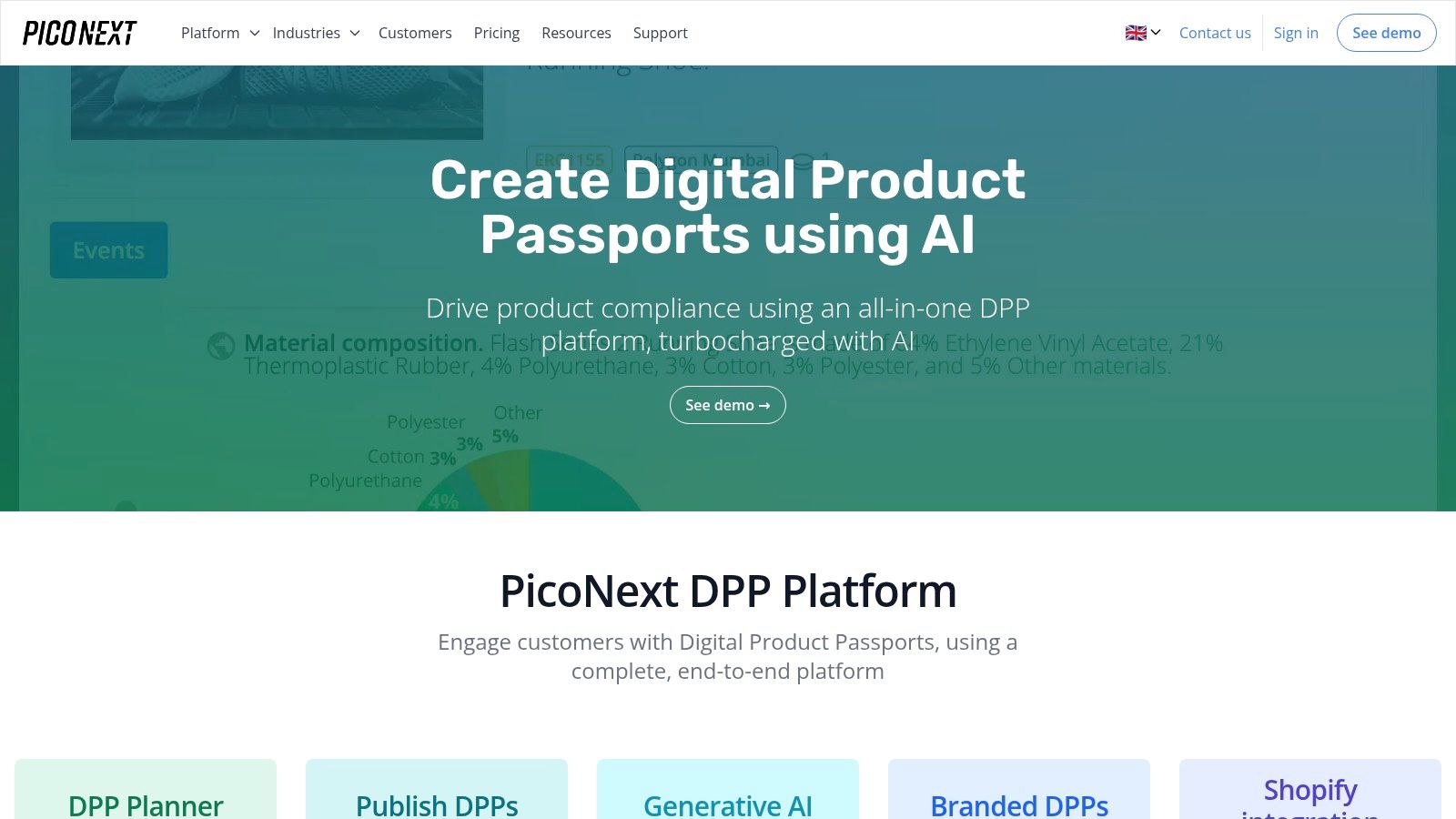
The platform provides category templates, cloud-hosted passports and downloadable QR codes. Eligible plans also include AI-assisted summaries and blockchain publishing.
- Structure: Templates help organise category-specific information, but catalogue attributes need checking against the required passport fields.
- Collection: Establish how supplier-owned values are requested, attributed and approved beyond the Shopify catalogue.
- Access: Confirm which plans support restricted information and how audience eligibility is established.
- Publishing: Test release history and approval controls separately from cloud hosting or blockchain output.
The main benefit is reusing existing catalogue information rather than re-entering everything. The main risk is treating customer-facing product copy as verified supply-chain information.
Start with cloud publishing unless you have a defined operational reason for another architecture. A ledger won't establish whether a supplier's input is correct.
Pricing requires vendor contact, and feature availability varies by plan. Ask for a proposal that names the product-count rules, restricted-data capabilities and integration work.
AI summaries should remain draft content until a responsible person checks them. They can help explain approved information, but they don't validate composition, sourcing or performance claims.
7. Substantio
Choose Substantio for evaluation when DPP work sits inside a broader product and material compliance programme. Its wider platform covers areas including REACH and RoHS alongside passport generation.
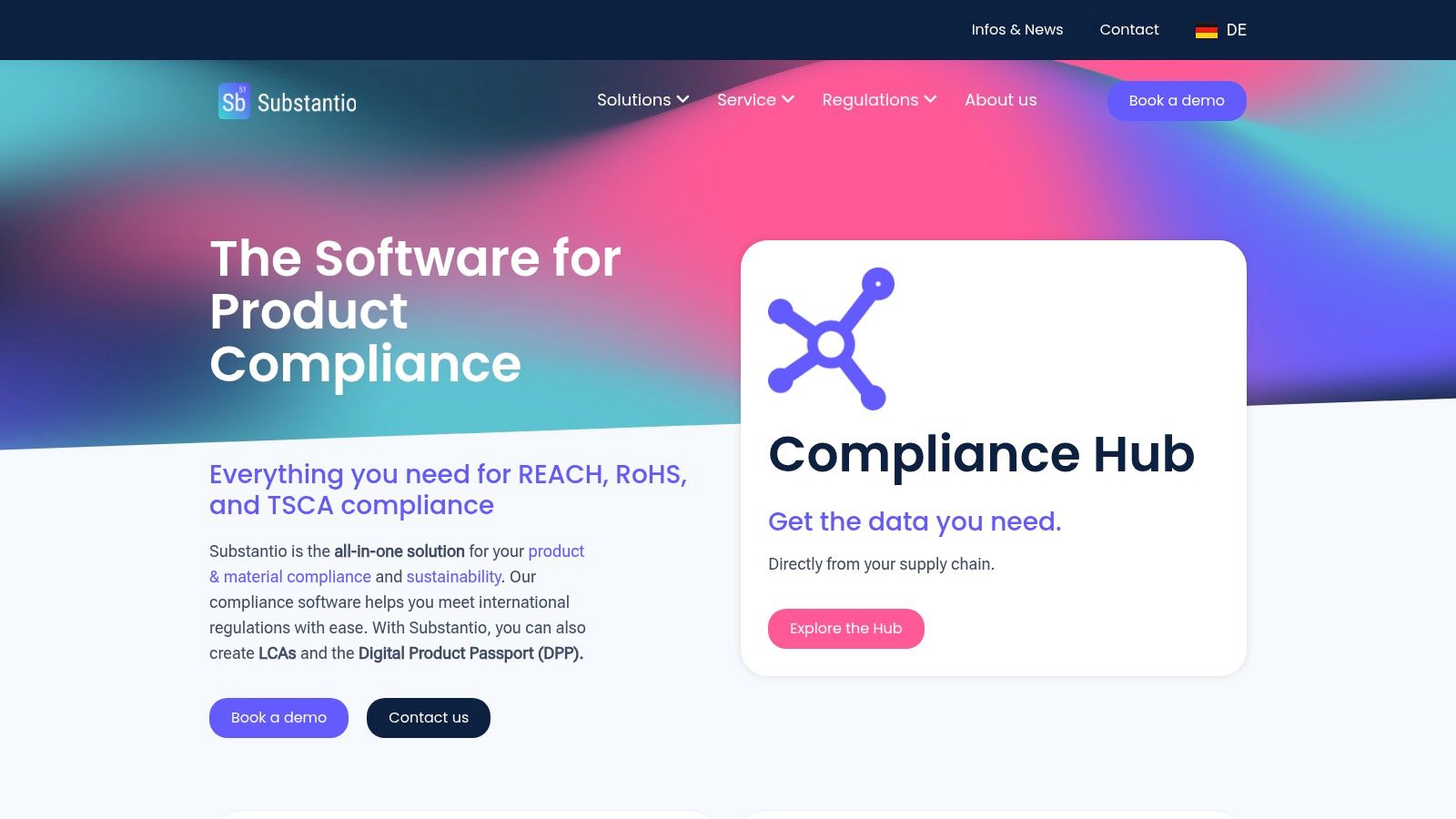
The vendor describes collecting information from ERP, PLM, PIM and supplier-management tools. It also describes outputs including AAS, JSON, HTML, PDF and QR-linked web pages.
Evaluate the data flow, not the format list
Product structure should preserve the relationship between components, materials and finished products. For teams managing substances of concern, that relationship matters more than generating an attractive PDF.
Supplier collection needs to demonstrate ownership and approval of incoming values. Confirm which connections and automated requests are included in the proposed deployment rather than assuming every described capability is standard.
Tiered access must work across relevant outputs. A restricted web field shouldn't become public through a downloadable file.
Versioned publishing should retain approved releases and identify the source values used for each output. Ask the vendor to update a material attribute and show every affected passport.
The advantage is potential reuse of product and supplier information across compliance workflows. The trade-off is a larger implementation than a standalone publisher.
Pricing isn't stated in the available product information. Request a scoped offer that separates platform access, data connections, configuration and ongoing maintenance.
8. Circulor
Circulor is a specialist candidate for battery manufacturers managing complex sourcing and lifecycle traceability. Its battery-passport materials describe supplier-data collection, a compliance engine, configurable permissions and passport generation.
For a battery producer, the useful demonstration isn't a completed passport. It's the path from cell, module and material inputs to the approved record for the finished battery.
- Product structure: Test relationships between upstream materials, components and the finished battery identity.
- Supplier collection: Follow a contribution through evidence review, correction and approval.
- Tiered access: Use configurable permissions to demonstrate distinct public, legitimate-interest and authority views.
- Versioned publishing: Verify how lifecycle changes affect passport releases and how historical information remains traceable.
Its advantage is battery-focused supply-chain depth. The company's descriptions of industrial deployments and external verification work are useful topics for reference discussions, but they don't replace an acceptance test for your battery types.
Its limitation is fit for simpler needs. A small brand seeking public product pages is unlikely to need the same implementation scope as a battery producer coordinating industrial traceability.
Expect a sales-led purchasing process. Define supplier participation, evidence responsibilities and implementation boundaries before comparing the proposal with lighter publishing tools.
9. Spherity VERA
Spherity VERA fits evaluations where DPPs must connect with industrial data networks and identity infrastructure. The modular offering focuses initially on batteries, with other described applications including textiles, electronics and furniture.
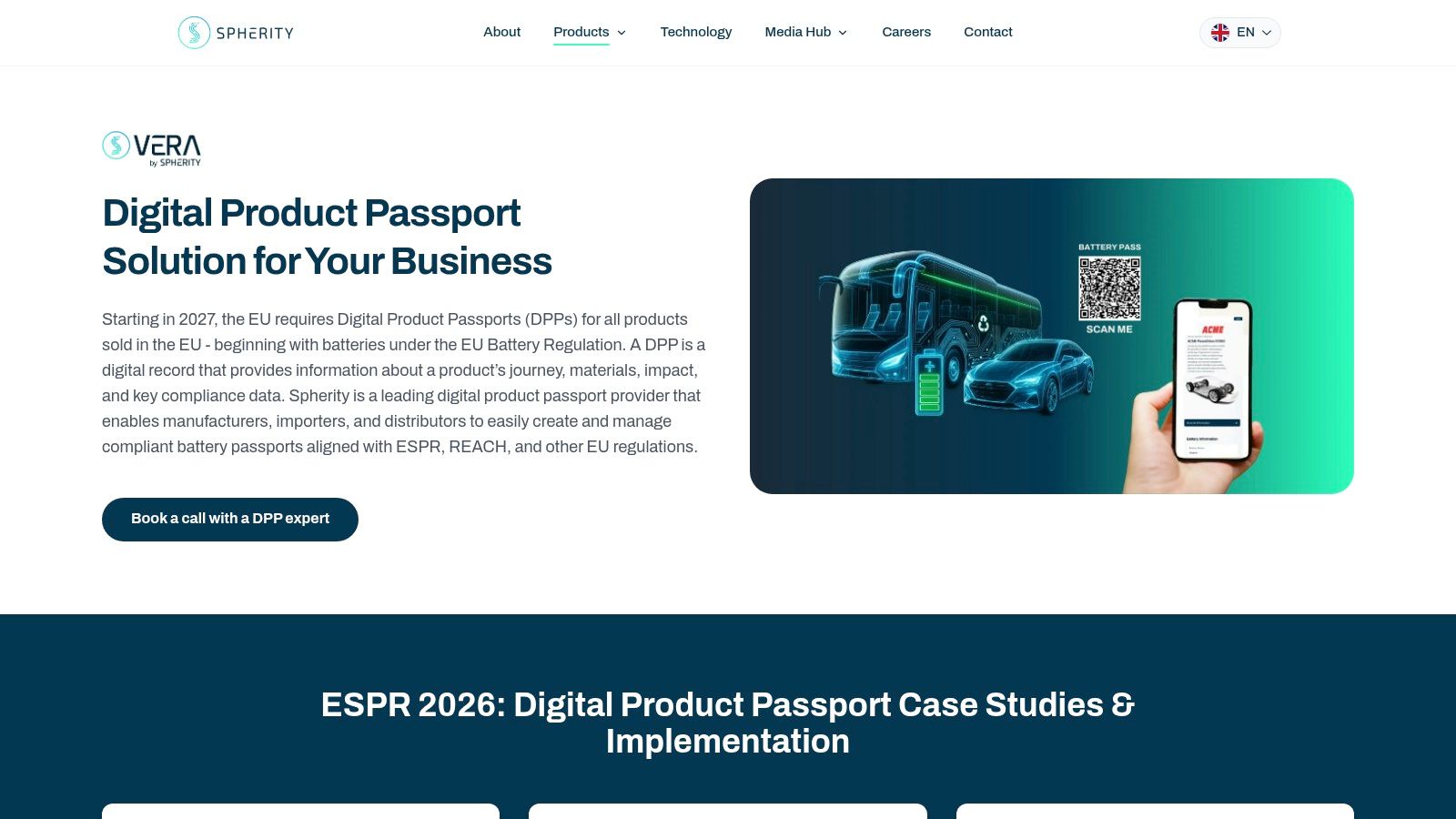
The company describes lifecycle-data management, configurable templates, QR-code generation and passport creation, management and publication. It also describes EU Business Wallet and eIDAS-related identity capabilities, alongside ecosystem connections such as Catena-X and Manufacturing-X.
Separate identity from authorisation
Product structure should accommodate your lifecycle events and required granularity. Supplier collection needs a demonstrated contribution workflow, including how a disputed or incomplete value is handled.
Tiered access deserves particular scrutiny. Establishing an organisation's identity and authorising it to read a particular field are separate operations.
Versioned publishing should preserve approved releases across lifecycle updates. Ask the vendor to show how information received through an external network changes a published passport.
The advantage is relevance to connected industrial environments. The trade-off is project complexity, especially where identity services and external ecosystems require additional configuration.
Public pricing isn't stated in the available materials. Require a clear distinction between current product functions, included connections and integrations that need project work.
10. Bosch Battery Passport
Battery producers needing documented APIs and differentiated access management should evaluate Bosch Battery Passport. The battery-specific solution sits within Bosch Semantic Stack rather than serving as a general-purpose passport publisher.

Its documentation describes passport creation through a browser interface or APIs, review and approval workflows, role-based access and automated calculation of specified dynamic attributes.
- Product structure: Battery-focused records are a clear fit for battery producers, not textile or general consumer-goods catalogues.
- Supplier collection: APIs can support incoming information, but test supplier ownership, evidence and approval rather than assuming an API provides collaboration.
- Tiered access: Documented public, interested-person and authority access is a strong basis for a demonstration.
- Versioned publishing: Confirm retained release history and the treatment of dynamic updates within review workflows.
The advantage is a focused technical offering with product documentation and release notes. The limitation is the technical work needed to map source systems, manage credentials and maintain data flows.
Use the EU Batteries Regulation explainer to organise internal scoping discussions, then validate binding interpretations with your legal or compliance adviser.
Confirm availability, onboarding, support and pricing directly with Bosch. Request a demonstration showing which dynamic changes require review and how users can identify the values behind a previous release.
Digital product passport software compared
Judge each platform against four requirements: structured product records, supplier-owned data collection, separate public and restricted audiences, and versioned passport publishing. Use the table to identify which capabilities are already described and which points require a direct vendor demonstration.
| Tool | Primary focus | Supplier data collection | Access-level control | Pricing transparency | Best for |
|---|---|---|---|---|---|
| DPPWare (recommended) | DPP preparation, supplier collaboration, and publishing | Supplier links request the fields each supplier owns; submissions are reviewed and approved | Field-level access for public users, legitimate-interest parties, and authorities | No online checkout; request a demo and written scope | Manufacturers and brands preparing DPPs, especially textile and fashion teams |
| Tappr | Product data, supplier evidence, and customer-facing DPPs | Supplier requests and evidence collection by link | Request a demonstration of public, legitimate-interest, and authority views | Quote-based; confirm plan, volume, and module limits | Brands combining supply-chain data collection with customer engagement |
| DPP Envoy | Product records, documents, supplier contributions, and hosted passports | Supplier portal and secure information-sharing links | Request a demonstration of the required audiences and access scenarios | Confirm current plan limits and enterprise pricing in writing | Teams seeking a defined supplier-to-publication workflow |
| PassportCraft | Guided product-data entry and QR-linked passport publishing | Ask for a live supplier-submission and approval workflow | Confirm roles, audience separation, and access limits for the proposed plan | Confirm current plan, volume, and publishing limits with the vendor | Teams starting from spreadsheets and seeking guided data checks |
| TrusTrace | Supply-chain traceability and DPP data infrastructure | Product and upstream supply-chain data collection | Request a demonstration of public, legitimate-interest, and authority views | Sales-led; request a scoped proposal covering implementation and volume | Apparel and textile organizations with multi-tier supplier networks |
| PicoNext | DPP planning and publishing, including Shopify workflows | Store product data is used; confirm how supplier-owned attributes enter records | Confirm whether restricted data and advanced integrations require a higher-tier plan | Contact the vendor and confirm limits for restricted data and integrations | Ecommerce-led brands using Shopify catalog data |
| Substantio | Product and material compliance with DPP generation | Supplier-data collection and enterprise data-source connections | Request a demonstration of the three required audience groups | Request written pricing and implementation scope | Companies addressing DPPs as part of a broader compliance program |
| Circulor | Supply-chain traceability, especially battery passports | Supplier and lifecycle data collection | Configurable permissions for different audiences | Sales-led; request implementation, supplier-onboarding, and volume pricing | Battery manufacturers with complex sourcing and traceability needs |
| Spherity VERA | Modular DPPs and lifecycle data for regulated products | Request a demonstration of supplier-field collection, review, and approval | Request a demonstration of public, legitimate-interest, and authority views | Request a written quote and module scope | Companies connecting DPPs to industrial data networks and ecosystems |
| Bosch Battery Passport | Battery-specific passport creation and maintenance | APIs can receive data; confirm supplier ownership, evidence, and approval | Role-based access for public, interested-person, and authority audiences | Confirm pricing, onboarding, and support directly with Bosch | Battery producers needing API, access-management, and review workflows |
Treat supplier submission and audience separation as baseline requirements. If a vendor can only explain them as configuration options, ask where the work happens, who approves each value, and which fields appear on the public passport.
How to Choose Your DPP Software Without Buying Unnecessary Scope
Run a scripted pilot and judge every shortlist against four needs: product data structure, supplier data collection, tiered access levels and versioned passport publishing. A polished demo proves little. Give each provider the same product record, the same supplier scenario and the same change request.
Confirm the applicable rules. Map products against the ESPR legal text and, for batteries, the Battery Regulation linked above. For other groups, fields, granularity and access rights still depend on delegated acts. Get binding interpretation from legal or compliance.
Score the data model. Ask the vendor to show one product with identifiers, materials, suppliers and completeness by section. Require passports at model, batch and item level if your catalogue needs them. Reject tools that treat every populated field as ready.
Test supplier collection. Send a field-level request for only the values that supplier owns, record who supplied each answer, reject an incomplete response and approve a correction. Keep unverified values separate from approved ones.
Prove access and publishing. Compare the public page with restricted views for legitimate-interest parties and authorities. Check authentication and authorisation separately, including exports. Publish, print the QR code, change data, release a new version and confirm the public passport still shows public fields only.
Check cost and exit terms. Read software pricing beyond list prices as a warning that the subscription quote is only the start: implementation, supplier onboarding, product-volume rules, hosting, support and exports decide the real total.
Procurement rule: Score demonstrated functionality separately from roadmap commitments.
The ESPR passport provisions tie the passport to a persistent product identifier and accurate, complete, up-to-date information. Test identifier continuity and controlled updates, not page appearance.
DPPWare fits this workflow with field-by-field completion, supplier links for batch-related values, completeness tracking, public pages that expose public fields only, QR codes and versioned publishing. Validate product-specific requirements, testing and certification separately.
Frequently Asked Questions
When do DPP requirements apply?
The fixed battery-passport deadline and covered categories are set out above. For other product groups, requirements depend on forthcoming delegated acts, so don't treat indicative planning schedules as binding compliance dates.
Does ESPR require the same passport for every product?
No. The framework allows product-specific requirements, including information, granularity and access conditions. Choose configurable records rather than assuming a generic template will remain sufficient.
How should we collect supplier data?
Request only the fields each supplier owns, record who supplied them and review the answers before approval. Keep incomplete responses separate from approved values.
Should every passport field be public?
No. Applicable rules determine access rights. Test public, legitimate-interest and authority access separately, and verify that restricted information doesn't appear in public exports.
Does buying software make a product compliant?
No. Software supports information preparation and management; it doesn't constitute legal advice or replace product testing, certification or conformity assessment. Check binding questions with your legal or compliance adviser.
DPPWare offers structured product records, supplier-request links, readiness reporting and versioned QR-linked publishing for teams preparing DPP information. Visit DPPWare to request a demo using a product line and supplier-data scenario from your own catalogue.
This article explains regulations in general terms and is not legal advice. For a binding assessment of your products, check with your legal or compliance advisor.